In 2023, Samsung engineers pasted proprietary source code into ChatGPT to check it for errors. The code could then be used to train OpenAI’s models, which could expose it to other users, including bad actors. Samsung had no way to remove it, and banned staff from using generative AI tools for three years.
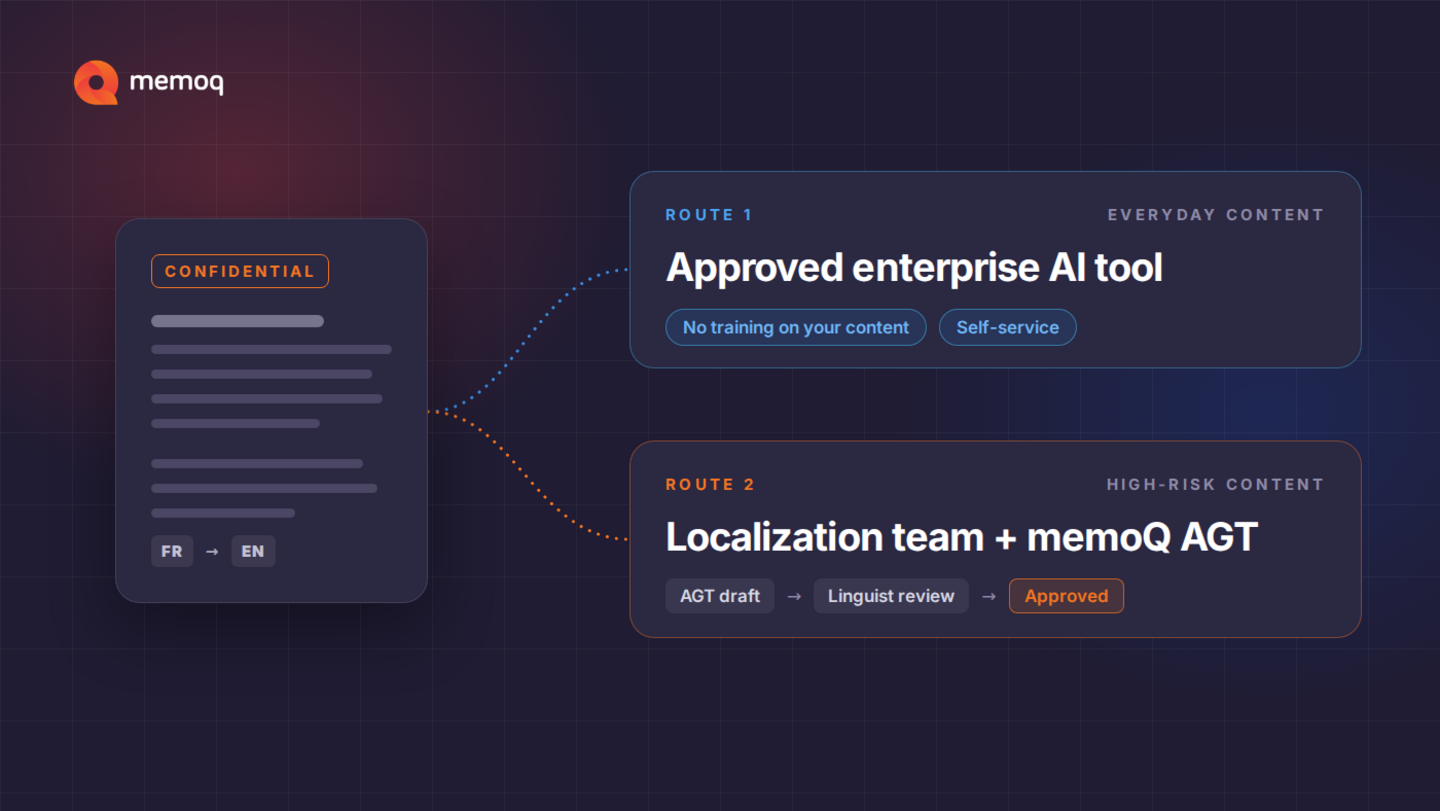
Translation poses a similar risk when an employee pastes a confidential document into a public AI tool like ChatGPT. A ban on its own rarely stops employees who need a quick translation. The answer is secure AI translation, which is a fast, approved option that doesn’t train on your content, stores data where you choose, and proves its security with independent audits.
Why Are Employees Translating Confidential Documents With ChatGPT?
Using an AI tool a company hasn’t approved is called shadow AI, and it’s common. Software company PagerDuty ran a 2026 survey on AI use at work. Of the office workers surveyed, 66% said they had used AI tools even though they believed company policy didn’t allow it, and 88% had shared work information with public AI tools.
The survey didn’t ask about translation specifically, but shadow AI translation is an easy habit to fall into. Employees usually turn to public AI tools for one of three reasons:
- The official process is slower. A request to the localization team or an agency may take days, but a public AI tool translates the text almost instantly.
- They don’t know there is an official process, or who to ask.
- They don’t see the risk. Pasting text into a translation box feels like a quick way to understand a document, so few people think of it as sharing company data.
What Are the Risks of Using Public AI Tools for Translation?
Translation workflows handle some of a company’s most sensitive material, including HR files with personal data, M&A agreements, and marketing campaigns for products that haven’t launched yet.
When any of it is pasted into a public AI tool, three things can happen…
Are you interested?